
5 Apps That Make Small Business Compliance Simpler to Handle
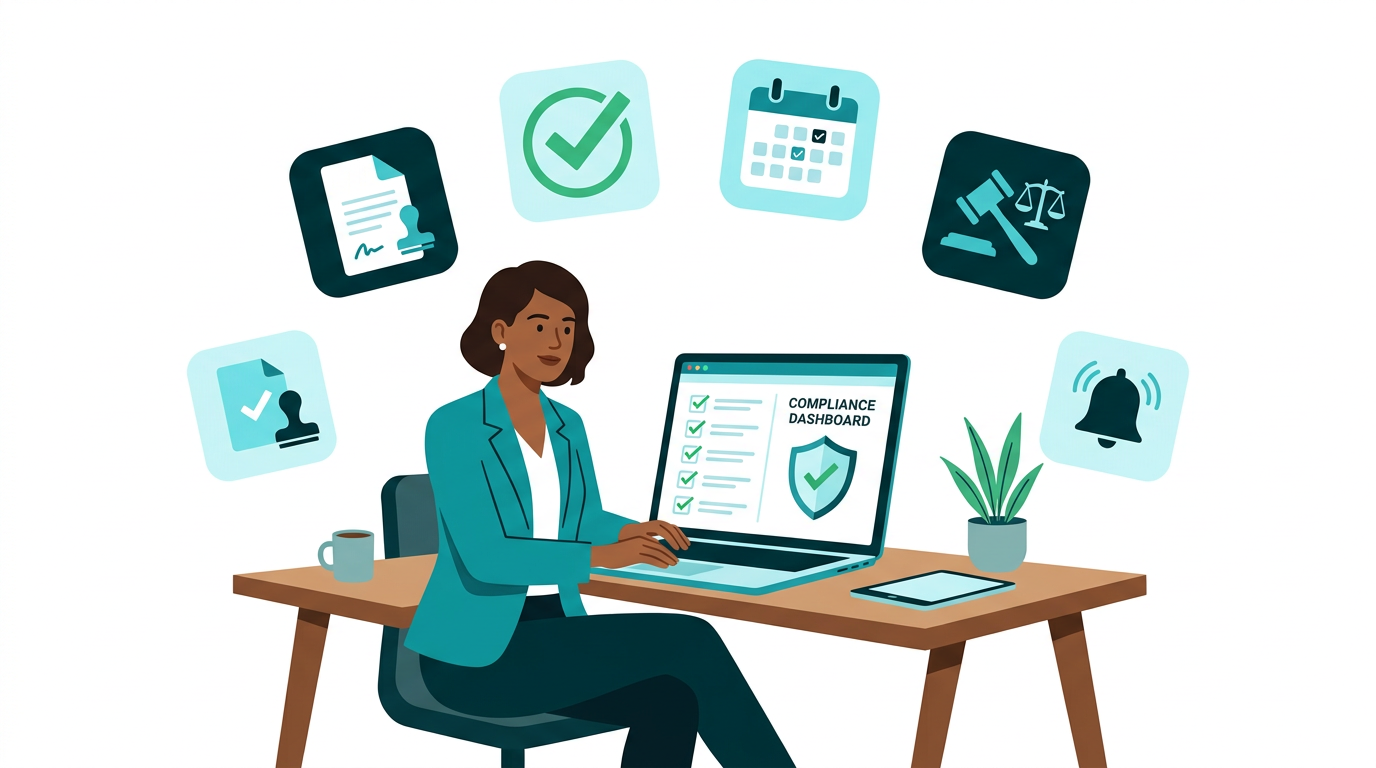
For many small business owners, compliance immediately brings to mind complicated HMRC guidance, administrative paperwork, and uncertainty over whether every requirement has been dealt with properly. That experience is becoming less common for businesses that use the right digital tools. The regulations themselves may not be simpler, but software can now manage much of the routine compliance work quietly in the background.
Often, the difference between an owner who worries about every HMRC deadline and one who handles them with relatively little disruption comes down to a small collection of dependable applications used consistently. These five tools can reduce much of the effort involved in keeping a small business compliant.
Sage: Digital Accounting and Making Tax Digital Software
Sage helps small businesses manage financial compliance without requiring constant manual involvement. It connects directly with business bank accounts, imports transactions automatically, calculates VAT, supports Making Tax Digital submissions to HMRC, and keeps digital financial records organised so businesses are prepared well before filing deadlines arrive.
Sole traders and small limited companies preparing for MTD for Income Tax Self Assessment can already use Sage for quarterly digital reporting. Adopting the platform in advance gives businesses an opportunity to establish the records and routines required for compliance rather than having to catch up quickly once the rules apply.
Trustpilot: Verified Customer Reviews and Reputation Platform
Business compliance involves more than meeting HMRC requirements. Consumer protection regulations also require companies to present themselves honestly and transparently to customers, and a publicly available record of genuine customer feedback can provide visible evidence of that openness.
Trustpilot provides a recognised platform where businesses can collect and display verified customer reviews. Alongside its reputational value, maintaining a consistent history of authentic feedback can demonstrate transparent trading practices and help establish long-term customer trust.
AutoEntry: Automated Receipt and Invoice Capture
Businesses must maintain records of legitimate expenses and process supplier invoices accurately. AutoEntry reduces the manual work involved by allowing receipts and invoices to be submitted through photographs, email, or scans, after which the relevant information is extracted automatically and transferred directly into accounting software.
This approach removes the need for receipts to accumulate until tax time. Expenses can be documented as they happen, supplier invoices can be processed when they arrive, and supporting records remain complete and available whenever they need to be reviewed.
Tide: Dedicated Business Banking Platform
Using a personal account to handle business transactions can make compliance unnecessarily difficult. Tide provides a dedicated business current account that includes automatic transaction categorisation and direct integration with accounting software.
When business income and expenditure are kept within one clearly separated account, reconciliation becomes easier, expenses are simpler to identify, and the financial information used for compliance submissions can remain accurate and well organised.
Coconut: Tax Management App for the Self Employed
Not knowing the amount currently owed to HMRC can be a significant source of stress for small business owners. Coconut addresses this by analysing income as it is received, automatically estimating the associated tax liability, and allocating a corresponding amount to a dedicated tax pot.
The app also categorises business transactions and provides an ongoing view of profitability. As a result, owners can monitor their financial position throughout the year instead of discovering the full picture only when it is time to file.
Frequently Asked Questions
What does MTD compliance require from a small business?
Making Tax Digital compliance requires businesses to maintain digital records of income and expenses and use recognised software to send tax returns and updates to HMRC rather than relying on paper records or manual processes. VAT-registered businesses are already subject to this requirement. MTD for Income Tax Self Assessment will also extend these digital obligations to sole traders and landlords above certain income thresholds. Beginning with software such as Sage can help businesses establish compliant processes from the outset without creating unnecessary additional work.
How much weekly time should a well-organised small business need for financial administration?
When effective systems are already in place, financial administration for a small business should generally require no more than a couple of hours per week. Periods around deadlines may demand slightly more attention, but current records keep the extra workload limited. Business owners who regularly spend substantial amounts of time on financial administration often find that an appropriate combination of tools can reduce that commitment considerably.
Is an accountant still necessary when a business uses accounting software?
Many owners with straightforward small business finances can manage routine compliance successfully with reliable software. Accountants provide the greatest value in more complex tax situations, year-end planning, and strategic business decisions. When an accountant is used, organised digital records can reduce the amount of time they need to spend handling the business's affairs and may consequently reduce their fees.
What problems can arise if digital records are not maintained for MTD?
Failing to keep appropriate digital records can create both financial and operational difficulties. HMRC can impose penalties for non-compliance with MTD requirements, while businesses without properly organised records may face more work and a higher risk of mistakes when submissions become due. Establishing suitable systems before they are mandatory can reduce exposure to penalties and avoid the disruption of having to transition at short notice.
Can these applications be connected to create an integrated system?
Yes. The applications included in this list were selected because they can connect effectively with one another. Sage integrates with AutoEntry for document capture, Tide for bank feeds, and Coconut for tax management, allowing information to move automatically between the platforms instead of requiring manual transfer across separate systems.
 Read article